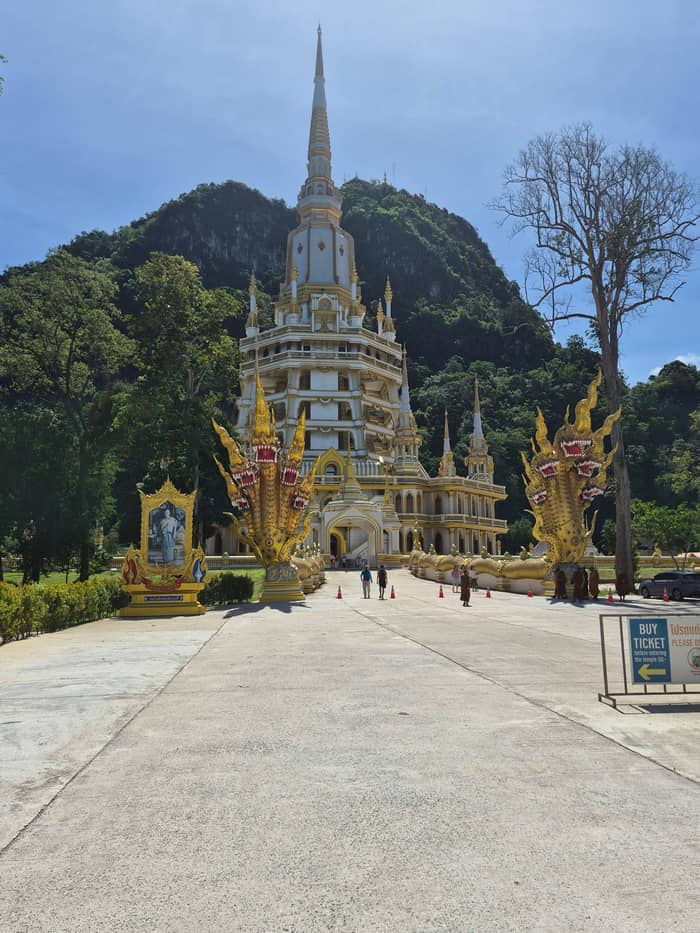
The short end
Tight stop
For a fit walker
- Time1 hour
- OrderTemple last
- GroupLimited to 9
Size up your group price
Tiger Cave Temple, Emerald Pool and hot springs from Krabi
★ 4.8 · From 4,025 reviews
Side-by-side: 3 options
Pick the group size and compare how much time each day gives the temple.
≈
View≈
View≈
ViewFigures are GetYourGuide from-prices, translated at the ECB reference rate. The booking step shows what you pay exactly.
No official source gives a climbing time, so this guide shows what operators actually allow at the temple, how the heat and the stairs change the budget and how to fit the hike into a day with the pools.
Editorial team, tigercavetemple.top · Updated November 16, 2026 · Takes 8 min
Basics
Ask how long it takes to climb Tiger Cave Temple and you will find confident answers on every blog, but no official source gives a time. The Tourism Authority of Thailand calls the climb vertiginous and counts 1,260 steps to the top, where it promises a 360-degree outlook.1 A TAT feature on a film shoot quotes an actress who climbed 1,237 steps on a day off,5 and the sibling guide on the steps explains the gap between the two counts. For timing, the useful official fact is what the sources do not say: no speed or duration.
That leaves operators as the best evidence of how long people actually spend. A day tour schedules the temple stop in advance, and the listings show what the people who run these days budget. They vary from 1 hour to 2 hours of time at the temple, a stop that has to cover the walk up, time at the top and the walk down. Treat their numbers as a budget for a group, not a record or a promise for you.
A budget is not a pace. Your own time depends on your fitness, the weather, the number of people on the stairs and how long you stay at the top. The map puts the summit marker only about 0.4 km from the foot in horizontal distance.6 The climb is a vertical effort in a short distance, not a long walk. A fit climber and a casual one can differ by far more than the numbers suggest, and the sensible plan is to allow generous time and treat anything below it as a bonus.
Time budgets
| Listing | Time at the temple | What else is on the day |
|---|---|---|
| The site's own day | 1 hour | Pools, springs and lunch |
| Pools and temple day | 1.5 hours | Hot springs, pool and lunch |
| Outback day with the temple | 2 hours | Sanctuary, pool and spa |
| Jungle day, private or small groups | 2 hours | Pool and hot springs |
| Private city tour | 2 hours | A crab statue and a market |
Stop durations as each listing states them; the stop covers the whole visit, not only the stairs.
The site's own day gives the Tiger Cave Temple 1 hour, the final stop before a drive of 1 hour back toward Ao Nang. That is the tight end of the range, and it assumes you walk steadily and keep the top short. A day from another operator that also runs the temple last gives it 1.5 hours, with a hike and sightseeing as the labels, and a third stretches it to 2 hours, with photos and free time inside the stop.
Shorter listings are built around the temple. A half-day listing pairs it with an elephant sanctuary in 3 hours in all, and gives its own count of 1,237 steps and a warning for guests with heart conditions, joint or knee problems and respiratory issues. A private city tour of 4 hours spends 2 hours at the temple, 1 hour at a crab statue and 1 hour at a market. A day open to private or small groups splits its 7 hours into blocks of 2 hours each, the temple among them.
Put these side by side and a pattern emerges: the shorter a stop, the more it asks of a person who is already tired from a morning of swimming and walking. If you have a choice, give the temple 1.5 to 2 hours and treat the rest as slack. Ask your operator when the van leaves the car park, since the number that matters is the hour by which everyone must be at the van again, not the hour you set off. The table below sets the budgets side by side.
Time budget
Temple stops: 1 hour on the site's own day, 1.5 hours on the pools and temple day, 2 hours on the Outback day and 2 hours on the private city tour.
The Tiger Cave Temple climb has no timetable, but the weather does. TAT gives the summer months, March to May, as averaging 28 to 38 degrees Celsius across Thailand,2 and the climb is steady effort in that heat. The half-day temple and elephant listing puts shoes, sun cover and water at the top of its advice, and the private city tour adds a hat or umbrella and a towel for the hike. Take extra water and sip it regularly, not only when thirst arrives.
Pace the stairs in short stretches. Climb until your breathing starts to push, stop in whatever shade or landing there is, drink, and go on when it settles. A climb with regular short breaks is no slower overall than one with a few long ones, and it keeps your legs fresher for the descent, which is where tired knees complain. Let people pass on the way up when a faster group arrives behind you, and keep to one side so that people coming down can use the stair.
Rain changes the stairs. In TAT's account the monsoon stretches from May to October, and its showers come as short, intense bursts that can run for a few hours around midday.3,4 Stone steps that are wet after a burst need slower, careful footing, and the practical answer is to climb before or after the middle of the day, not through it. TAT also tells travellers to follow the Thai Meteorological Department's forecast each day.8
Your pace
Match your fitness and your day to a budget at the temple.
If I climb steadily and keep the top short
Plan 1 hour
That matches the site's own day.
If I want photos and a rest at the top
Plan 1.5 to 2 hours
Other listings allow 1.5 and 2 hours.
If I am travelling with children or slower walkers
Plan 2 hours or more
Several listings give the temple 2 hours.
If I have knee, heart or breathing problems
Ask a doctor and skip the summit
One operator advises against the climb in such cases.
If It is the middle of a wet-season day
Wait for the rain to pass
Monsoon showers come in short, intense bursts.3
If I only want the view
Consider Dragon Crest instead
It is a 2 hour walk to a view of Phang Nga Bay.7
Pick a budget
The short end
For a fit walker
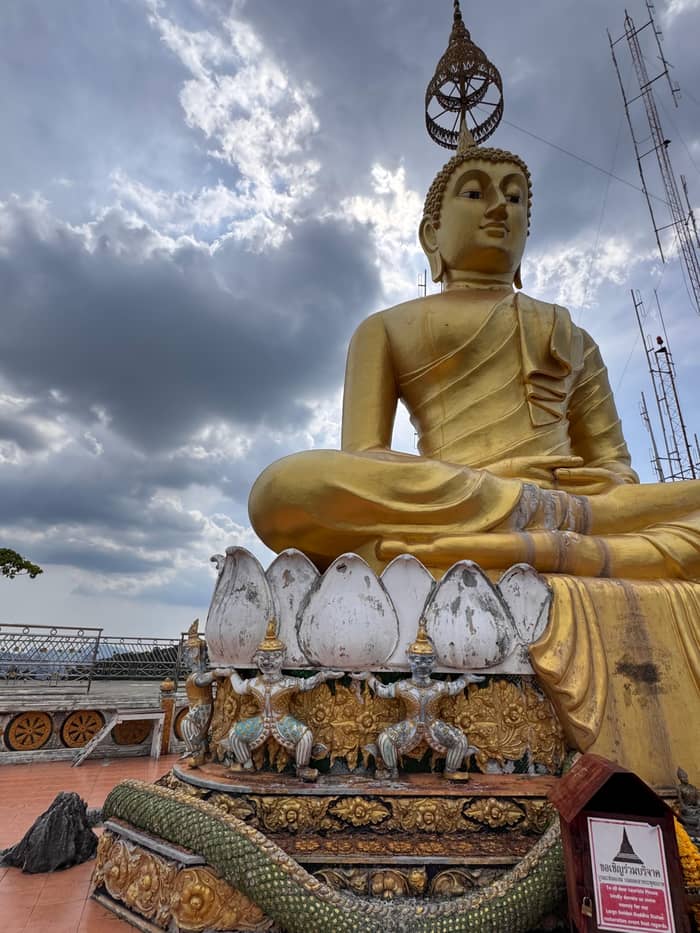
The middle
Time for photos
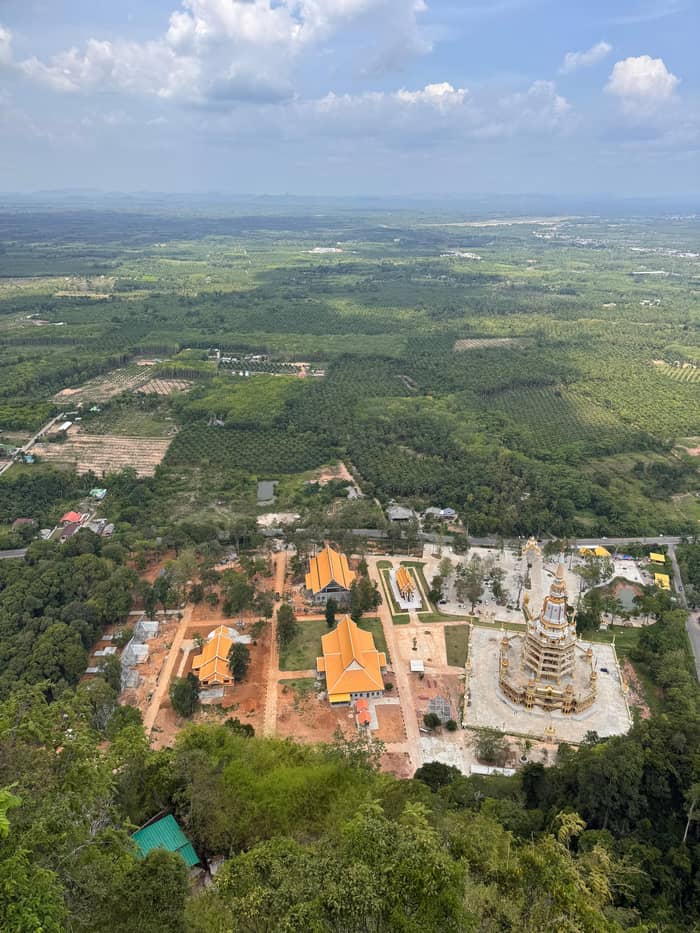
The long end
Room to linger
No official page lists medical limits for the climb, so the clearest guidance comes from one operator. The elephant and temple listing calls the climb steep and advises against it for guests with heart trouble, serious joint or knee problems, breathing difficulties or pregnancy. That is a decision for you and your doctor, not for a web page. If any of those apply, use the foot of the stairs as your destination, enjoy the grounds and let the rest of the group go up.
Children and older visitors can do the stairs at their own pace if they are in good shape, but nobody should be pushed up. A tour of the site's own kind runs 9 to 9.5 hours, with a small group limited to 9, which means the guide can wait for a slow walker, but also means the temple is the end of a long day. If your energy is low by the time you arrive, take the stairs as far as is comfortable and turn back without any guilt.
The summit is a reward, not a duty. TAT sells it as a viewpoint with a 360-degree outlook,1 and the next guide on the summit says what is up there. There are other ways to get a view in Krabi: TAT names the Dragon Crest Mountain, where the walk up takes 2 hours and ends at a view of Phang Nga Bay.7 Someone who cannot climb the temple can still enjoy the pools and springs of the same day, which are flat and close to the road.
Climb plan
Arrival
The climb begins about 0.4 km from the summit on the map.6
Setting off
TAT calls the climb vertiginous.1
Midway
Carry water and sun protection.
The summit
TAT describes a 360-degree viewpoint.1
Going down
Wet steps need careful footing in the monsoon.3
Back at the van
The site's own day follows with a drive of 1 hour.
The sensible order is the one most listings use: pools and springs in the morning, temple at the end. The site's own day goes through the Emerald Pool, the Blue Pool, lunch and the hot springs before it reaches the temple, and a day from another operator does the same, with a drive of 1 hour in between. Put the stairs at the end and you climb with warm muscles, though also with a day's tiredness. Put the pool at the end and you finish with a swim, but you climb in the full heat of the middle of the day.
One listing reverses the order. It starts with the sanctuary walk, the pool and the spa, then has lunch and a short van ride of 20 minutes before the temple, where it allows 2 hours. If you can pick, a long temple block at the end of a day is the most forgiving. A short one at the start of a day gives you cooler hours, but you have to plan the pool around wet clothes afterward. Whatever you choose, know the return time and keep a note of it on your phone.
The temple needs a clear head and a dry layer. A shirt that is damp from the pool is uncomfortable on the stairs, and the dress code asks for covered shoulders and knees at some sites on the day. The dress guide covers the clothing in full. If you are travelling independently, set aside 2 hours for the temple on top of the road, and add a buffer for the descent, because getting back to the foot of the stairs is half the trip, and it is the half that is easiest to forget.
Video
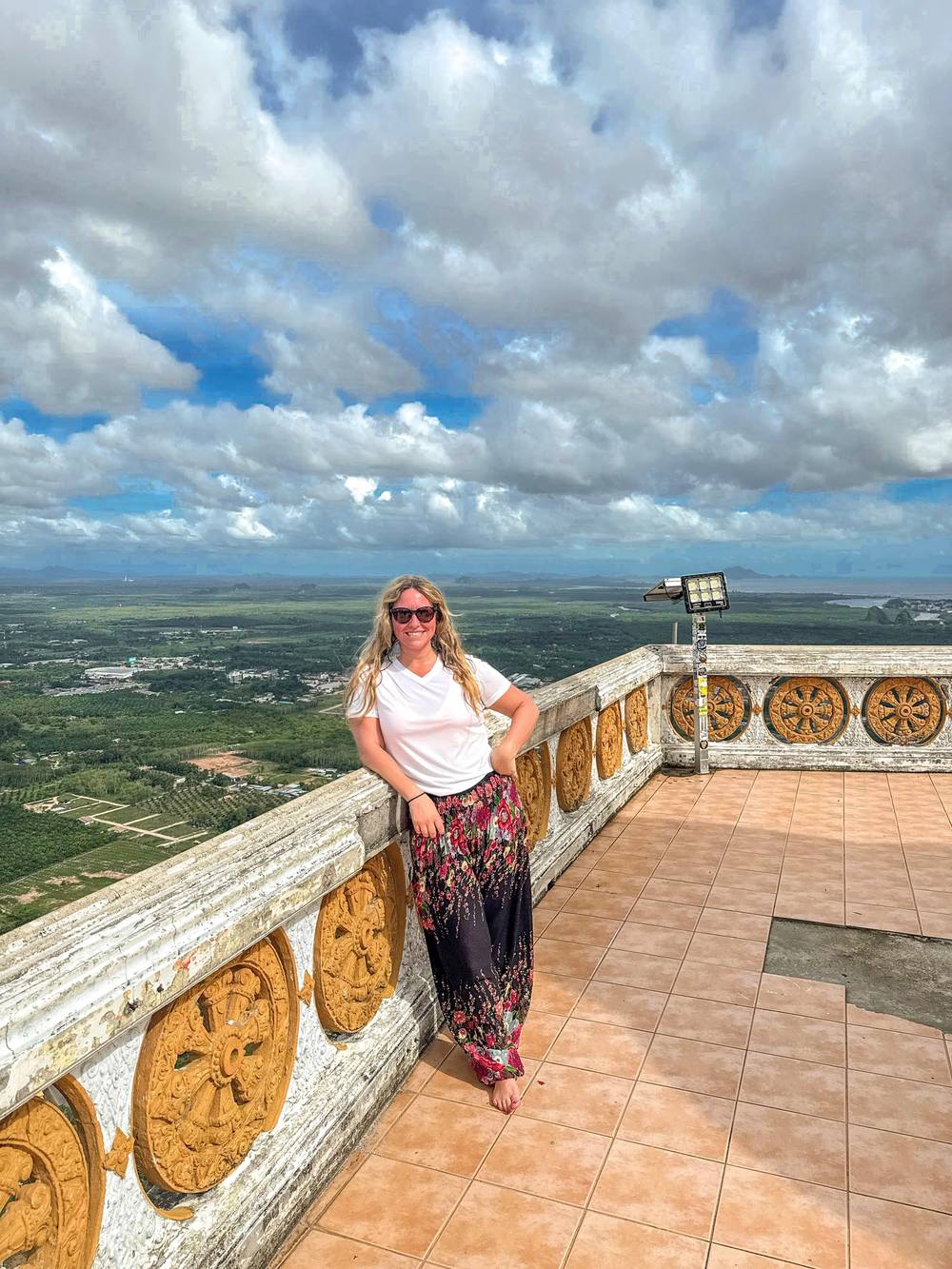
Travels on Toast on YouTube · The clip loads only after you tap play.
The monsoon rains tend to be short, intense bursts of rainfall.
Before you climb
The site's own listing is a good model because it states every stop. Its stops run from a 1 hour drive through the Emerald Pool, then the Blue Pool and lunch at 1 hour apiece, then the hot springs at 2 hours and the temple at 1 hour, and a 1 hour drive back, with the whole day given as 9 to 9.5 hours. The difference between the stops and the total is pickup, the wait for the group and the drop-offs. For you it means that the temple is rarely the whole story of a day, and that its time is squeezed by everything before it.
If you are travelling alone and have no stop times to follow, set your own. Give the stairs a generous block, add time at the top for the view and for resting, add the walk down and finish with a buffer. No official page we could read gives opening or closing hours for the temple, so check at the gate or with your operator before you plan a sunrise or sunset climb, and do not trust a number from a blog.
A good day also leaves room for what you did not plan. Someone in your group will stop to photograph the view, someone will need to rest, and the stairs will be busier or quieter than you hoped. The listings that allow 2 hours at the temple build that slack in, and the ones that allow 1 hour assume none. Whichever you choose, the return time is the one number to remember, and the rest of the climb can be as slow as you like.
FAQ
Day listings budget between 1 and 2 hours for the whole temple stop, with 1.5 in the middle.
TAT calls it vertiginous, and an operator cautions against it for some health conditions.1
Monsoon showers arrive as brief, heavy bursts, in TAT's words, and can last into the afternoon.3
Listings run both in one day, with the temple last and the hot springs in between.10
One listing recommends water, sun protection and comfortable shoes for the climb.
TAT frames the summit as a viewpoint, and the pools and springs on the same day are separate stops.1
Sources
Planning the Tiger Cave climb? Ask a real person here.